Automations Every Photographer Needs (And Why We Don’t Run Our Businesses Like It’s 2012 Anymore)
February 26, 2026
Kendra Swalls
explore the blog
Ideal Client Workbook

Email Starter Kit

You'll also love
search the post index
MORE ABOUT ME
Struggling to grow your business during nap times, school lines, seeking balance? Been there, ready to guide you from survival to success!
I'm kendra! Your go-to girl for all things business and marketing
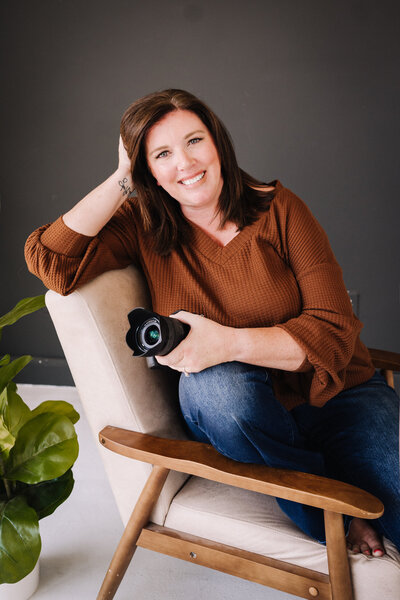
There was a time in my photography business when I thought being “hands-on” meant doing everything myself.
If someone inquired about a session, I typed the email.
If they booked, I typed another one.
If I needed to follow up, I set a reminder…and sometimes forgot.
If I delivered a gallery, I meant to ask for a review…but didn’t always remember.
It felt normal. It felt hardworking. It felt responsible.
It also felt exhausting.
What I didn’t realize at the time was that I wasn’t being thorough – I was being the bottleneck. Every step in my business required my energy, my memory, and my time. And when life got busy, which it inevitably does, things slipped.
What’s changed over the last decade isn’t just technology. It’s the realization that automation isn’t a shortcut. It’s a sustainability strategy.
Today, the photographers who are building profitable, long-term businesses aren’t necessarily working more hours. They’re working with better systems.
And it usually starts in three places.
The Quiet Power of Content Automations
Marketing used to feel like a constant performance.
If you didn’t show up on Instagram every day, you worried you’d disappear. If you didn’t send an email this week, you assumed clients would forget you. Everything felt urgent.
But urgency isn’t strategy.
Now, instead of scrambling to create something every time I need to be visible, I’ve built systems that carry my content forward even when I’m not actively thinking about it.
A welcome email sequence greets new subscribers without me having to remember to send it. Blog posts turn into Pinterest pins. Podcast episodes become emails. The effort I put in once continues working long after I hit publish.
It’s not about automating creativity. It’s about protecting it.
When content isn’t dependent on your mood, your schedule, or your energy level, your business stops swinging between silence and overdrive.
Editing Has Evolved – And That’s a Good Thing
There was also a time when editing meant starting from scratch with every image.
Every adjustment was manual. Every gallery took hours longer than it probably needed to. And somewhere along the way, that became a badge of honor.
But efficiency doesn’t make you less talented.
Using AI-assisted culling tools, preset systems, and consistent editing workflows doesn’t remove artistry. It removes unnecessary friction. It shortens turnaround times. It gives you back evenings and weekends.
And when your editing process becomes streamlined, something unexpected happens: your client experience improves. Galleries go out faster. Communication is clearer. You’re less stressed, which means your interactions are better.
Automation in editing isn’t about replacing your eye. It’s about supporting it.
Where Automation Makes the Biggest Difference: Communication
If there’s one place most photographers still operate manually, it’s communication.
And it’s also where the biggest missteps happen.
Inquiries sit unanswered for a few hours too long. Follow-ups never get sent. Review requests slip through the cracks. Re-booking reminders rely on memory instead of a system.
When communication depends entirely on you remembering what to do next, it’s only a matter of time before something gets missed.
Now, when someone reaches out to me, they receive an immediate response. Not a cold, robotic one, but a clear, helpful one. It sets expectations. It explains next steps. It reassures them they’re in good hands.
After a session, review requests are triggered automatically. A year later, a rebooking reminder arrives right on time.
None of it feels impersonal. In fact, it feels more professional.
Because consistency builds trust.
Automation Isn’t About Being Less Present
This is the fear I hear most often:
“I don’t want my business to feel automated.”
But automation doesn’t replace connection. It replaces repetition.
It handles the predictable steps, the confirmation emails, the prep instructions, the follow-ups, so you can be fully present for the creative, relational parts of your business.
You still get to show up warmly. You still get to personalize. You still get to create meaningful experiences.
You’re just not manually typing the same foundational emails for the hundredth time.
The Bigger Shift
The photography industry has matured. Clients expect professionalism. They expect quick responses. They expect clarity.
The photographers who stand out aren’t necessarily the loudest. They’re the most seamless.
Automation doesn’t make your business less human.
It makes it more dependable.
And in a world where everyone feels busy, overwhelmed, and stretched thin, dependability is powerful.
If you’re still running your business the way you did in the early days — manually, reactively, hoping you remember everything — it might be time for an upgrade.
Not a complicated one.
Just a smarter one.
If you want the full breakdown of which automations to prioritize and how to implement them without tech overwhelm, I go deeper in this week’s episode of the Girl Means Business Podcast.
Because your business shouldn’t rely entirely on your memory, your mood, or your manual effort.
It should support your life — not consume it.
Ready to up your email marketing game? Snag your free email marketing kit of all the things you need to get started